Meet Sophie Wettstein, Owner, Mindful Blooms Farm
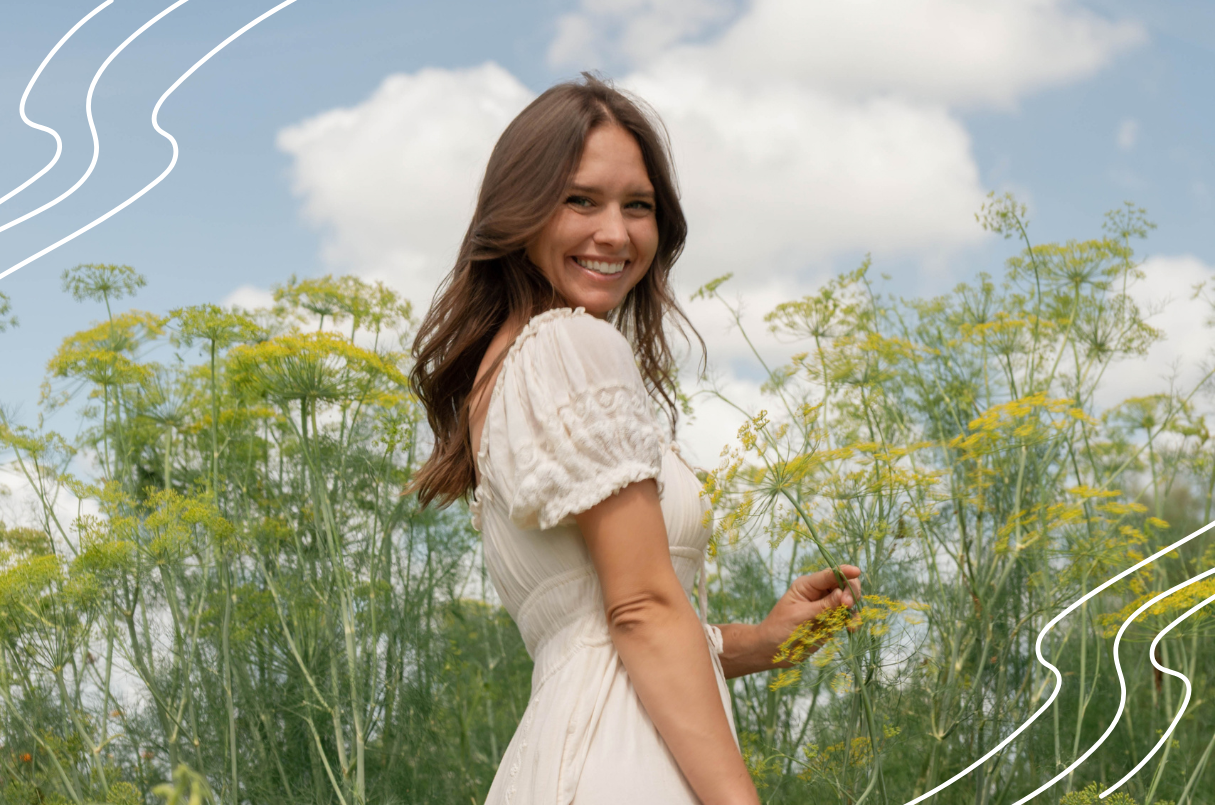
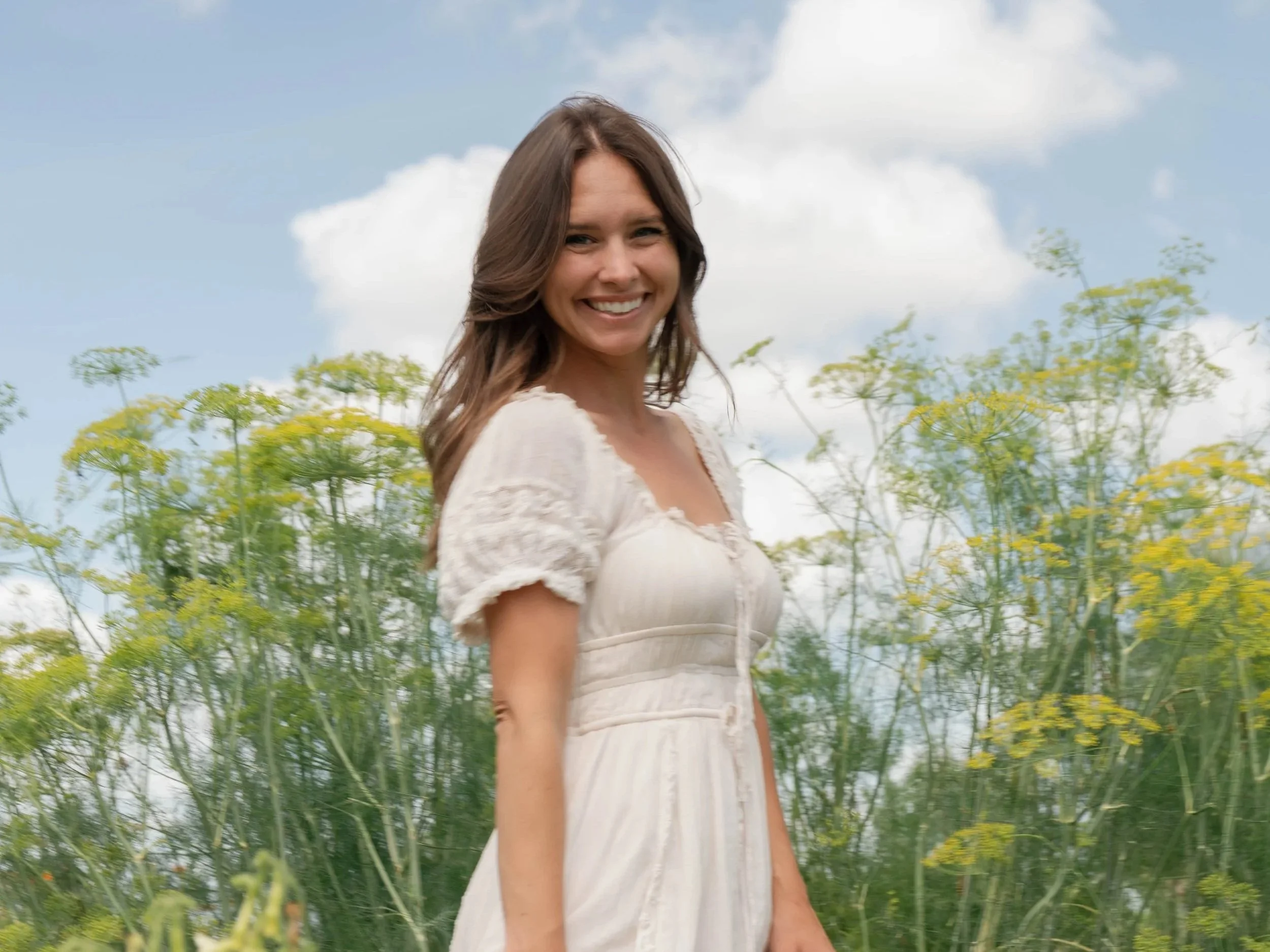
Sophie Wettstein is the owner and farmer at Mindful Blooms Farm, a regenerative cut flower farm in Myakka City, Florida, built on a quiet act of defiance: growing flowers without a single pesticide in an industry that mostly runs on them.
Eight years ago, she printed out her “dream day” on company ink at a corporate recruiting job that made her miserable. Today, she’s living it. Between u-pick days, weddings, workshops, and online courses, she’s producing a feature-length documentary about where our flowers really come from. We chatted about leaving corporate (twice), rebuilding after two hurricanes, saying no as a recovering people-pleaser, and a moment that left her and her mom in happy tears.
Tell us who you are in just a few words or sentences.
Hi, I’m Sophie! I’m the owner of Mindful Blooms Farm, a regenerative cut flower farm in Myakka City, Florida.
Was farming and Mindful Blooms always part of your plan?
Farming was definitely not a part of my life or career plan. I studied Social Entrepreneurship and always wanted to have a business that made a positive social or environmental impact. After graduation, I wound up with a typical corporate recruiting job in Philadelphia and was miserable. I eventually pivoted to take a job on a farm in Asheville, NC. The goal was to learn how to grow food, with the hope of living a simpler lifestyle (which didn’t involve stressing over paychecks spent on things I don’t really value). It was on the farm that I fell in love with growing organic flowers. Here I am eight years later, and so incredibly passionate about the importance of local, organic flowers.
Walk us through a typical day on the farm.
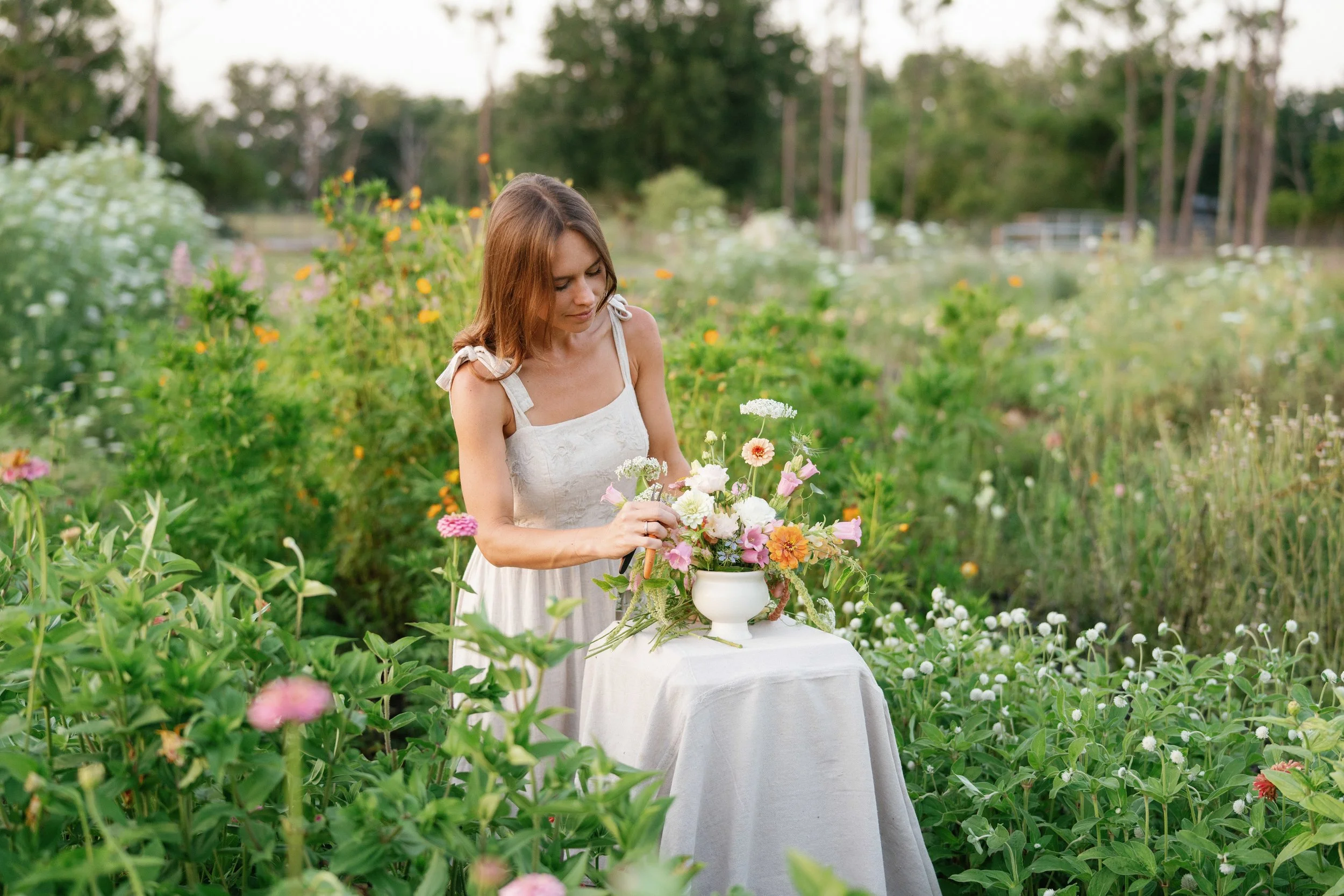
I wake up just before sunrise and make my coffee, then head out into the field for quiet time—journaling, meditation, and box breathwork. I enjoy watching the sky change colors with the sunrise, usually with my two kitties and my dog Star in tow. I’ll eat a quick breakfast, throw on my overalls and boots, and get to work while it’s still cool out.
This time of year there’s a lot of seeding and planting to be done, so I’m usually building up beds and planting flowers. Sometimes I’ll have a volunteer helping, and sometimes it’s just me, oscillating between daydreaming and being so present with what I’m doing that my mind completely stills. That’s one of the things I love about farming: the motions are so simple—weeding, planting, harvesting—that it becomes a meditation practice.
The day shifts inside when it gets hot in the early afternoon, and I’ll sit at my computer for administrative work: scheduling u-picks, wholesale, wedding florals, farm events, growing and arranging classes, online courses, and social media.
I’ll do a bit more seeding, pinching, or harvesting, and then around sunset I’ll pick fresh veggies from the garden and make dinner. I love to eat outside with my mom—whose property the farm is on—and we’ll watch the sunset with the animals, always filled with gratitude for the beauty around us.
In terms of farming, did you have any mentors take you under their wing?
Although I grew up in suburban Florida, my mom always had a kitchen garden in our backyard. I spent a lot of my childhood playing there, snacking on cherry tomatoes off the vine and connecting with the abundance of life within the garden walls. When I started my first farming job, my bosses Vanessa and Alex Campbell were definitely mentors. They have 25+ years of farming experience and taught me so much about working with nature, not against it.
What are some of your day-to-day tasks that don’t make the highlight reel?
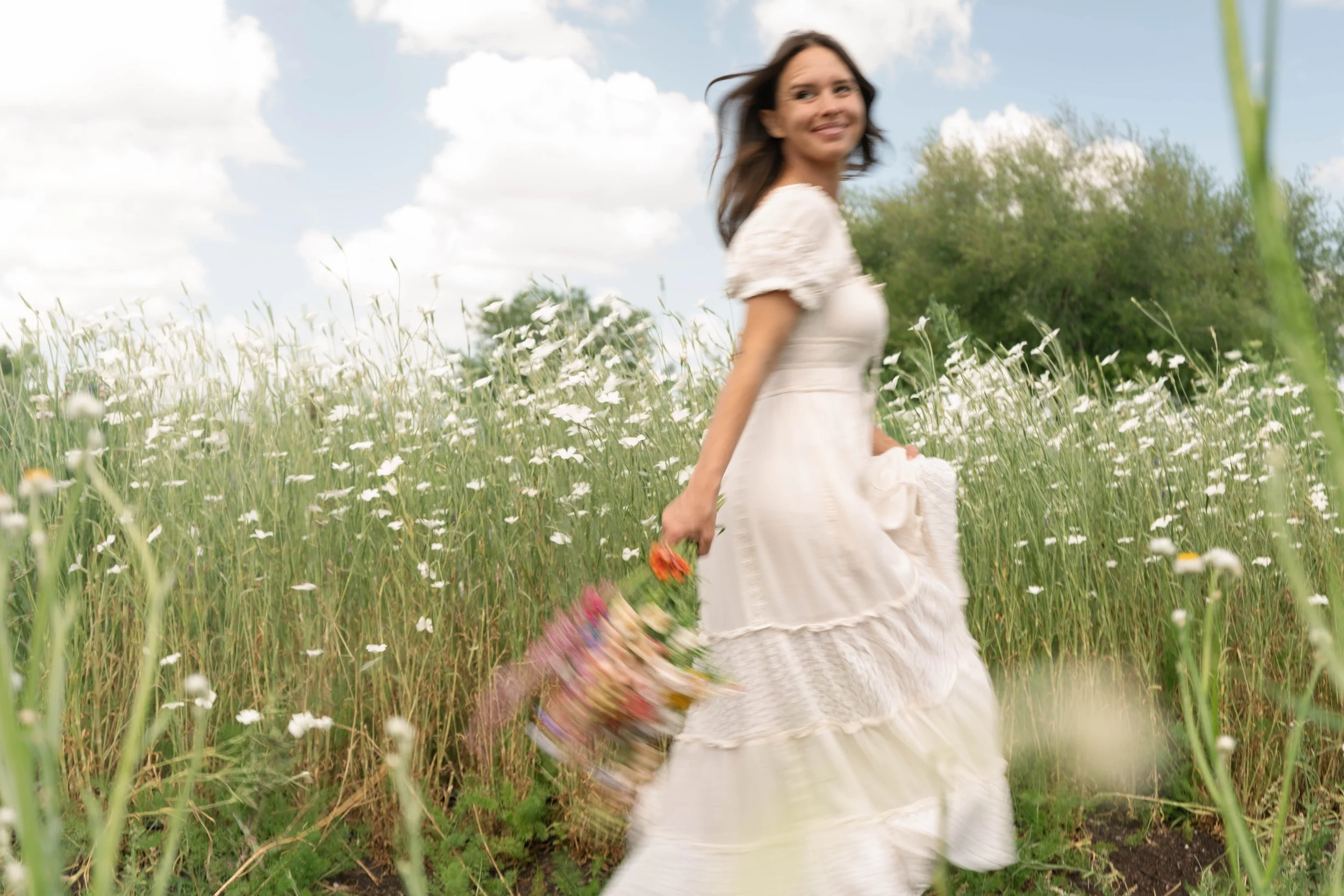
Many sides of farming are not shown, starting with the smell of the fish emulsion! The plants love it so much that you learn to deal with having hands that smell like rotten fish. Then there’s the constant pest damage; right now, ants are taking out full beds of flowers (my sunflowers and celosia that were looking so good)! How I handle it? I just keep planting more. The good thing about farming and nature is that it’s constantly changing. So right now, ants are a problem, but in two weeks the weather will shift, and the ants won’t be an issue. I’ve learned to allow, let go, and just keep planting more. There’s always loss along the way, but the flowers will still bloom and be beautiful.
With everything you manage, how do you practice slowing down and prioritizing yourself?
Slowing down has been a huge lesson for me. I started the farm to escape the corporate grind that I found so meaningless. I had a lot of drive and excitement early on, but eventually got very burnt out physically and mentally. I learned that a farm is only as strong as its farmer, and that I have to prioritize my physical, mental, emotional and spiritual health. As a practice, I like to prioritize three tasks for each day, and the rest can wait. There’s a never ending to-do list on the farm and in life, but I try to focus on enjoying the moment.
You’ve talked about how after college, you “fell out of alignment” working in corporate recruiting and sales. What steps did you take before making the leap?
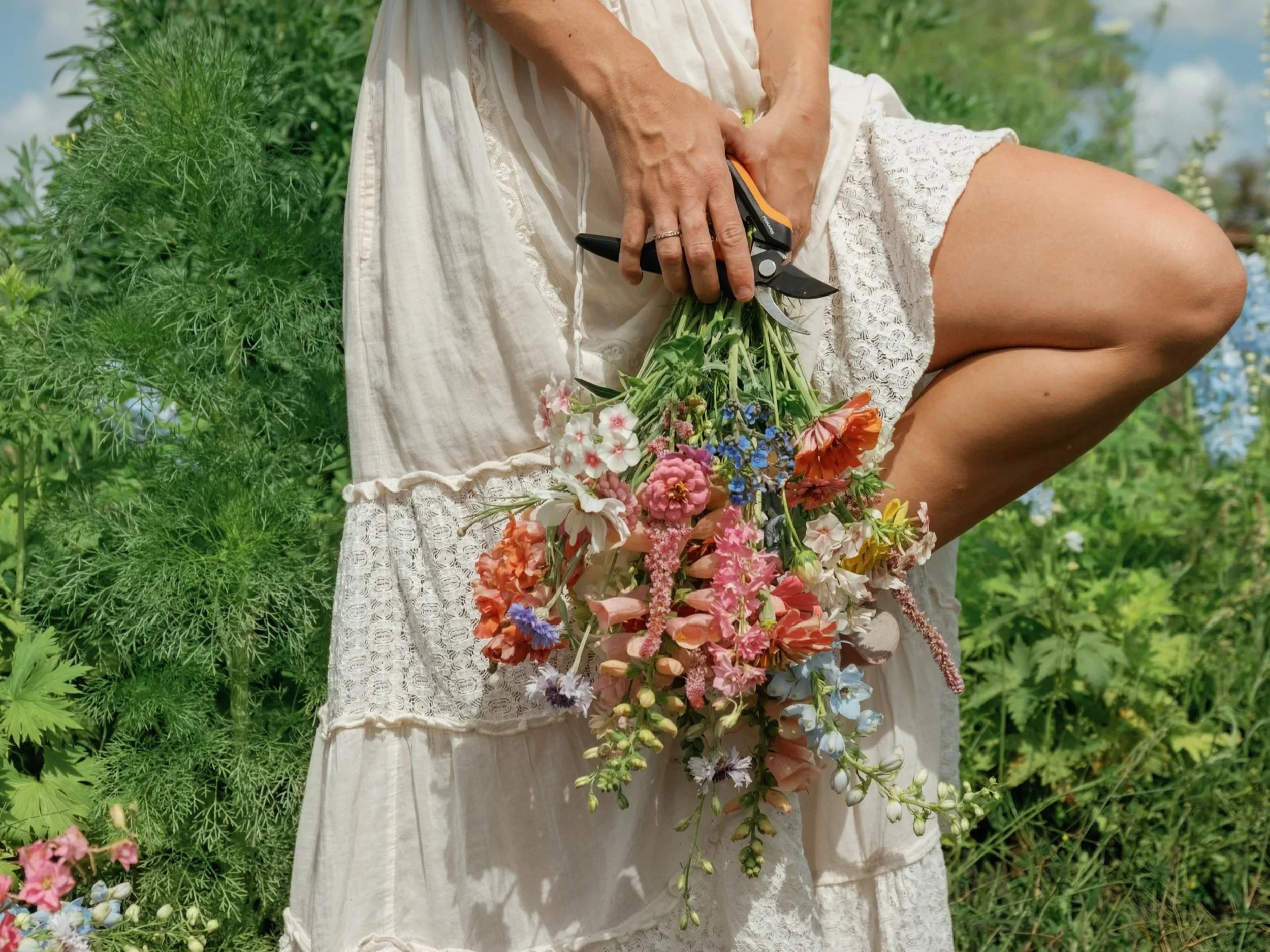
I spent a lot of time processing my feelings around it all before making the decision to leave the corporate world. Eventually, I got tired of journaling and talking to my friends and family about wanting something different; I needed a change. One day without even planning to, I just quit! My boss tried to talk me out of it, but I told her I wanted something different for my life. It was actually during that conversation when she told me to read ‘The Secret,’ which led to my learning about manifestation and the law of attraction. I began to get clarity on what I wanted, and I decided to go for it.
What would your advice be to others feeling misaligned in their careers?
For some transparency: after working on a few farms, I actually found myself back in the corporate world in Philly. I’m not sure how, but I got pulled back into what was familiar to me, and was even more miserable than before. At that point, I knew how it felt to be on a farm versus staring at a screen at my sterile office. One day, I printed out my ‘dream day’ (on company ink, no less). I typed out every little detail—and now eight years later, what I typed out is literally my current day-to-day life. I didn’t know how it was going to happen, but I didn’t need to. I just knew how I wanted to feel every day. Having that clarity, alignment, and trust in myself allowed the opportunities to unfold.
Another note: you don’t have to be extreme and quit your job. That can feel too scary and too big. So start smaller. Ask yourself what lights you up with excitement. What’s something you love learning about or are quietly drawn to? Go near it, get into those physical spaces, and connect with people with similar interests. You’ll be amazed how synchronicities begin to unlock.
What’s one of your favorite moments or experiences you’ve had at the farm?
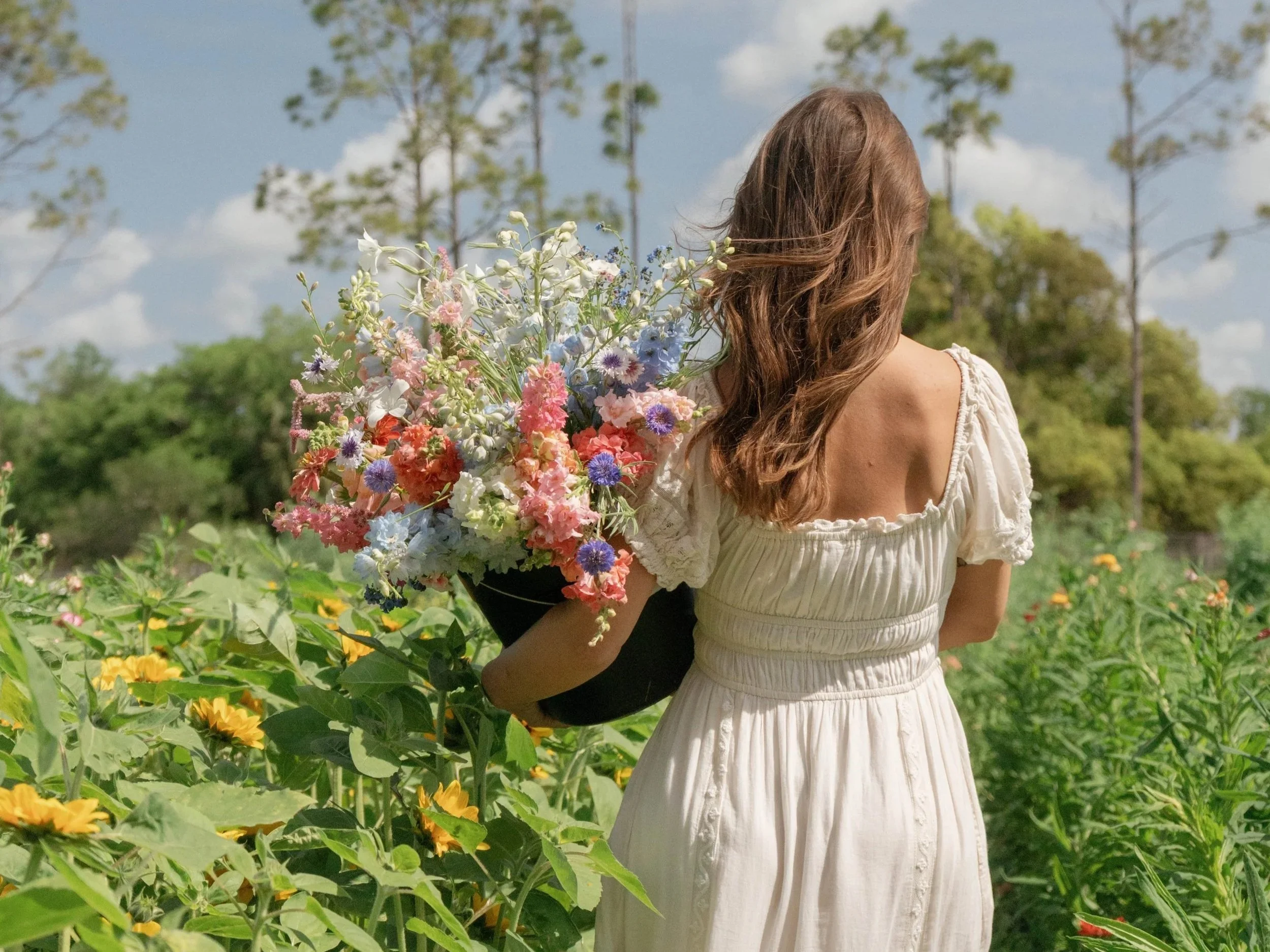
I always go back to my first u-pick event. It was April, towards the end of the season when the flowers were very abundant, and I didn't have time to pick everything in bloom. I invited people to come pick their own via Instagram, and we had 50+ people show up to enjoy the farm, pick flowers and play with the animals. Afterward, my mom and I sat in our Adirondack chairs, absolutely exhausted but with happy tears in our eyes—so grateful that this dream of connecting people with nature and each other had come true. We also acknowledged that we couldn't do it without each other—I wouldn’t have reached this dream without her, and I helped realize her dream of bringing more joy and love to her land.
You've talked about how toxic the commercial flower industry actually is. Tell us about how you decided to go fully pesticide-free.
The flower industry is extremely damaging to the environment and to our health. More than 90% of the flowers sold in the U.S. are imported; they’re grown in factory-style greenhouses, dipped in chemicals, and fumigated when they arrive in the US—with tons of plastic, trash and chemical waste produced in the process. The way the system is set up is actually killing and harming nature. All of it goes against what flowers represent.
I wanted to offer an alternative with organic flowers grown sustainably and in harmony. Right away I had pest issues, with caterpillars eating my amaranth plants. But I knew that if I sprayed any pesticide, even an organic one, I’d be killing not only the caterpillars but also beneficial insects like ladybugs, bees, and butterflies. Instead of spraying anything, I manually removed the caterpillars. But after just a few days I noticed wasps on the leaves eating more caterpillars, and then birds flying in and eating them, too. I learned that if you allow it, nature balances itself. The more plants, insects, and biodiversity you have on your farm or in your backyard garden, the more you have a whole functioning ecosystem that’s able to balance itself in near perfect harmony.
Florida farming means building (and rebuilding) your work around hurricane season every year. How do you approach that uncertainty?
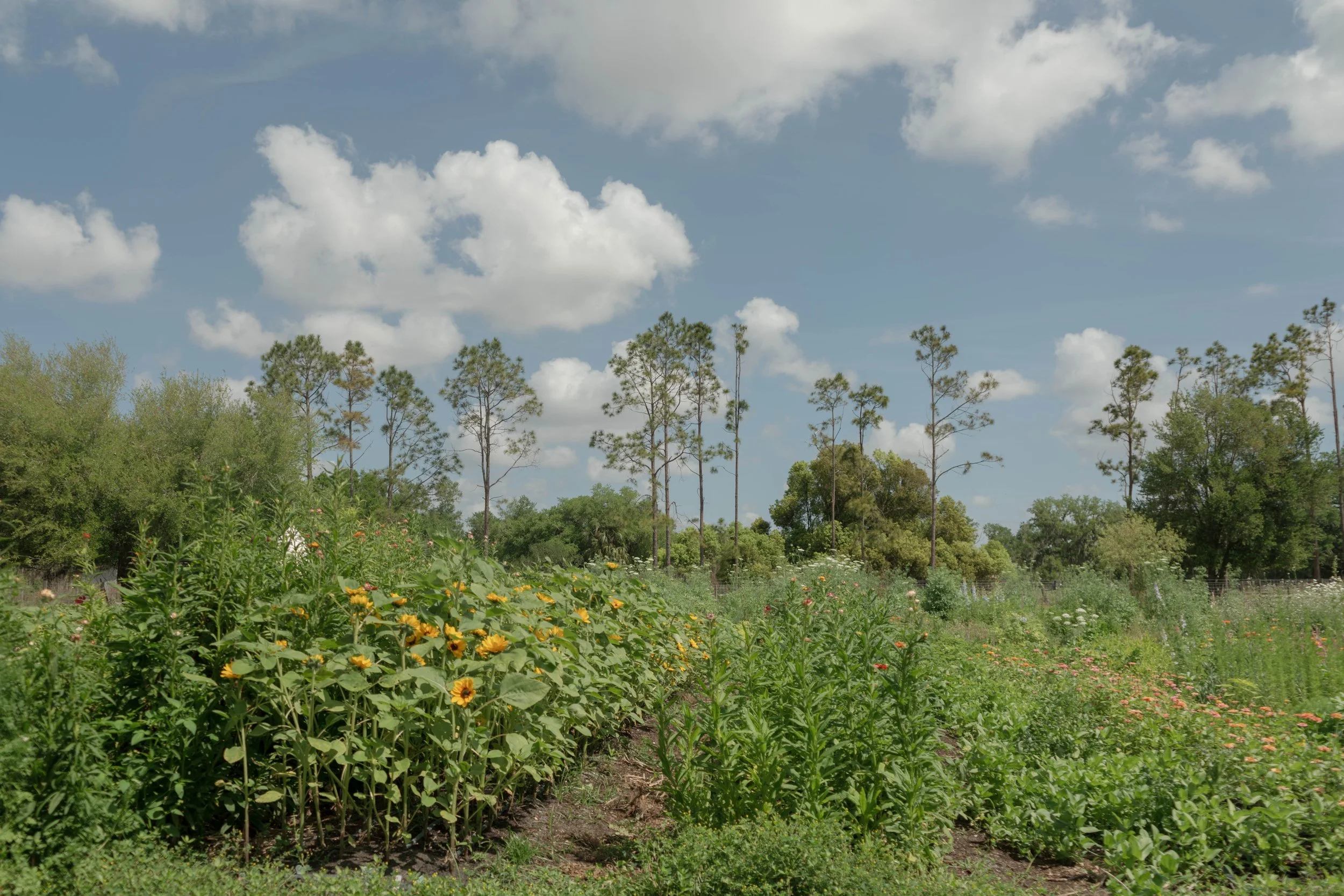
When I started, I worked against a hurricane and lost. In my second season, I was so excited to start growing—I had a field planted, weddings lined up, and farmers' market moving… until a hurricane swept in and took out almost everything in the ground. I felt defeated enough to think I should just sell everything and move. I sat in my feelings about it for a while, and then received messages from the community offering to help. Volunteers drove through nearly flooded roads to help me seed and plant more flowers, and I learned that not only do I believe in the farm, but other people do too.
This filled me with such vigor and purpose to rebuild and keep going. After the storm, I was amazed at how quickly the farm bounced back, and I learned about the resilience of it all: the farm, myself, our community.
Then in my 4th season, hurricane Ian did it again: wiped out all of the flowers that I put so much work, care, and hard manual labor into. Since I’d been through it before I knew that mentally I could recover, but physically I was exhausted. The hurricanes were too much of a risk and a pattern at this point to just hope for the best; I decided to push back my seasons by a month so that when a storm comes through, the plants are small enough to recover. I will also have more of my energy saved in case I need to replant or seed.
I’ve also been working on diversifying my revenue streams so that my income isn’t dependent on the growth and sale of flowers. I have two online courses, Growing Cut Flowers and Flower Arranging, to support myself and the farm throughout the year and through natural disasters, which are out of my control.
What’s something you’re currently learning about your business and yourself?
For my business, and I guess myself too, I’m learning to say no. To be honest, I’ve been learning this lesson since I started the farm. I’m a people pleaser at heart; I want to do a good job, get approval, and deliver what others need and want… but I’ve learned that I cannot possibly do it all. I get odd requests all the time, like ‘Can I buy 100 packs of seeds for a retreat I’m running?’ and ‘Can I host a pilates farm-to-table dinner?’ My first reaction is to say yes to everything, but I’ve been simplifying what I do and saying no—as uncomfortable as it makes me—to anything outside of it.
What are you watching / reading / listening to right now?
I’ve been on a big fantasy kick the past few years, starting with the ACOTAR series of course. I’m loving The Road of Bones, which is about witches and vikings. I love fantasy—to escape and daydream and play. Music-wise, I’m loving Jamie Duffy, Noah Kahan, Hozier, Flipturn and Gracie Abrams.
Who are some women in the farming world that you look to for inspiration?
I really look up to Erin Benzakein with Floret, and Jennie Love with Love ‘n Fresh Flowers. Both entrepreneurs pioneered the farmer florist movement in the 2010s. They focus on educating growers and creating a community of shared wisdom and support. They’ve inspired me to be a part of this movement and help educate and share what I’ve learned about growing flowers—especially in Florida where our climate is very different from the rest of the U.S.
What’s coming up for you that you want people to know about?
I’m currently working with a videographer to produce a feature-length documentary about the flower industry, from the massive industrial farms and their environmental damage, to the small-scale local growers making a difference. I love talking about why local and organic are so important. I’m so excited to share this documentary to educate consumers to know where our flowers are coming from, and at what cost.
Drop your links. How should folks get in touch?
Join the Each is Every community!
Become a member
Submit a profile nomination
Follow us @eachisevery